Pendulum clocks have fascinated people for centuries, not only for their aesthetic appeal but also for their remarkable accuracy in keeping time. Invented in the 17th century, the pendulum clock revolutionized horology and set the standard for timekeeping for centuries. This article delves into the science behind pendulum clocks, exploring how they work, their historical significance, and the principles of physics that allow them to keep time so accurately.
The Mechanics of the Pendulum Clock
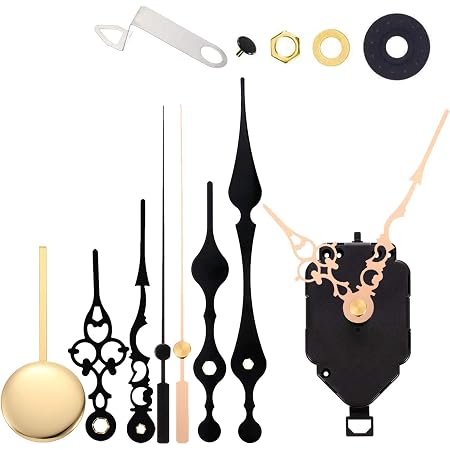
At the core of a pendulum clock is the pendulum itself—a weight suspended from a fixed point, which swings back and forth due to the force of gravity. The basic components of a pendulum clock include:
- Pendulum: The swinging arm that regulates the clock’s timing.
- Escapement Mechanism: A device that transfers energy to the pendulum at regular intervals.
- Clock Face: The dial that displays the time.
- Weight or Spring: Provides the necessary force to keep the clock running.
The Physics of the Pendulum
The functioning of a pendulum clock is primarily based on the principles of physics, particularly the laws of motion and gravity. A pendulum moves in a regular, periodic motion, which is influenced by several factors:
- Length of the Pendulum: The time it takes for the pendulum to complete one full swing is determined by its length. A longer pendulum swings more slowly than a shorter one.
- Gravity: The force of gravity pulls the pendulum downwards, affecting its swing. The stronger the gravitational pull, the faster the pendulum will swing.
- Amplitude: The angle at which the pendulum is displaced from its rest position also affects the period of the swing, although this effect diminishes at small angles.
The formula for the period (T) of a simple pendulum is given by:
T = 2π√(L/g)
Where:
- T: Period of the pendulum (time for one complete cycle)
- L: Length of the pendulum
- g: Acceleration due to gravity (approximately 9.81 m/s² on Earth)
The Role of the Escapement Mechanism

The escapement mechanism is crucial in translating the continuous motion of the pendulum into accurate timekeeping. This mechanism consists of gears and levers that interact with the pendulum to release energy at regular intervals. The primary functions of the escapement include:
- Timing Control: It regulates the release of energy to the gear train, ensuring that the pendulum swings at a consistent rate.
- Energy Transfer: The escapement provides small bursts of energy to the pendulum, compensating for any energy lost due to friction and air resistance.
- Ticking Sound: The distinct “tick-tock” sound of the clock is produced by the escapement mechanism engaging with the pendulum.
Historical Significance of Pendulum Clocks
The invention of the pendulum clock was a significant milestone in the history of timekeeping. Dutch scientist Christiaan Huygens is credited with creating the first practical pendulum clock in 1656, which achieved an unprecedented accuracy of about 10 seconds per day.
Before the pendulum clock, timekeeping methods were notoriously inaccurate. For instance:
- Water clocks were subject to fluctuations in temperature and evaporation.
- Sundials relied on sunlight and were ineffective at night or on cloudy days.
The introduction of the pendulum clock marked a turning point in various fields, including navigation, astronomy, and daily life. Accurate timekeeping became essential for:
- Maritime navigation, allowing sailors to determine their longitude more precisely.
- Astronomical observations, enabling scientists to track celestial movements.
- Industrialization, as factories could synchronize operations based on precise time.
Modern Applications and Innovations

While pendulum clocks are not as common in modern times due to advancements in digital and quartz timekeeping technologies, they still hold a special place in horology and design. Today, pendulum clocks are often used in:
- Aesthetic Displays: Many people appreciate the craftsmanship and beauty of pendulum clocks as decorative pieces.
- Educational Tools: Pendulum clocks are frequently used in classrooms to demonstrate principles of physics and mechanics.
- Restoration Projects: Collectors and enthusiasts often restore antique pendulum clocks, preserving historical craftsmanship.
Case Study: The Grandfather Clock
The grandfather clock, a type of pendulum clock, serves as an excellent case study for understanding the science behind pendulum timekeeping. Typically characterized by a tall case and a swinging pendulum, grandfather clocks were designed to maximize the length of the pendulum, thus improving accuracy.
One notable example is the Howard Miller Grandfather Clock, which features a pendulum length of over 40 inches. This design allows for a longer oscillation period, contributing to its precision. Such clocks can maintain an accuracy of within a few seconds per month, showcasing the effectiveness of the pendulum mechanism.
Statistics on Timekeeping Accuracy

When discussing the accuracy of pendulum clocks, it is essential to consider relevant statistics:
- Accuracy: A well-maintained pendulum clock can achieve an accuracy of ±15 seconds per month.
- Longevity: Pendulum clocks can function for decades, provided they are regularly wound and maintained.
- Historical Impact: The accuracy of pendulum clocks significantly contributed to the establishment of standardized time zones in the 19th century.
The Enduring Legacy of Pendulum Clocks

In conclusion, pendulum clocks represent a fascinating intersection of physics, history, and craftsmanship. Their design and functionality are rooted in the principles of periodic motion, gravity, and mechanical engineering, allowing them to achieve remarkable accuracy in timekeeping. From their historical significance in navigation and astronomy to their modern role as decorative pieces and educational tools, pendulum clocks continue to captivate our interest.
Understanding the science behind these remarkable timepieces not only enhances our appreciation for horology but also highlights the ingenuity of human innovation. As we move forward in an age dominated by digital technology, the pendulum clock remains a testament to the elegance and precision of mechanical engineering.